Why Every Brand Needs a Social Media Presence: Distribution Is the Real Advantage

Introduction Most founders ask the wrong question about social media. They ask: The real question is simpler — and more important: How does our brand get distributed? In today’s market, distribution is the bottleneck, not product quality, design, or even pricing. You can have the best offer in your category, but if people don’t see it consistently, it doesn’t exist. Social media is not about trends, vanity metrics, or chasing likes. It’s about owning a reliable distribution channel where your brand shows up repeatedly, predictably, and at scale. This article explains why every brand needs a social media presence, the strategic role distribution plays in growth, and how founders should approach social media as a business asset — not a chore. Step 1: Critical Questions That Must Be Answered To fully understand why social media matters for brands, these are the questions that actually matter: Let’s answer these from real-world experience. Distribution Is the Real Game Most markets today are oversaturated. There are: The difference between brands that grow and brands that stall is not quality — it’s distribution. Distribution answers one question: How often does your brand appear in front of the right people? Social media is one of the few remaining organic distribution channels where: If you don’t actively distribute your brand, someone else will occupy that space instead. Why Social Media Is a Distribution Engine (Not a Marketing Add-On) Social media is not just “content.” It’s: Unlike a website (which people must intentionally visit), social media pushes your brand into feeds, conversations, and daily habits. That’s the advantage. Brands with a social presence aren’t just found — they are remembered. Why Websites, SEO, and Ads Alone Aren’t Enough Many founders believe: “We have a website — that’s enough.” It’s not. Here’s why: Social media fills the gap between: The strongest brands don’t rely on one channel — they layer distribution. What Happens When a Brand Has No Social Media Presence From experience, brands without social media face predictable problems: Today, people don’t just “check your website.” They: No presence doesn’t look “minimal” — it looks invisible or outdated. Social Media Builds Trust at Scale Trust used to come from: Now it comes from consistent visibility. Social media allows brands to: You don’t need to go viral.You need to be consistently visible to the right audience. Trust compounds when people see you repeatedly. The Real Purpose of Social Media for Brands Social media is not about entertainment for brands. Its real purposes are: Every post answers one question: “What do we want to be known for?” Brands that understand this stop chasing trends and start building authority. Which Platforms Actually Matter? You don’t need to be everywhere. You need to be where your audience already pays attention. From experience: Platform choice is a distribution decision, not a creative one. Common Social Media Mistakes Brands Make Mistake #1: Posting Without Strategy Random content doesn’t compound. Mistake #2: Chasing Virality Virality without positioning creates noise, not growth. Mistake #3: Over-Promotion Social media is about value first, offers second. Mistake #4: Inconsistency Distribution only works with repetition. Mistake #5: Treating Social Media as a Side Task If it matters, it deserves a system. Real-World Case Study Insights Case 1: B2B Service Brand Without Social Media A service business relied only on referrals and a website.After building a consistent LinkedIn presence: Visibility removed friction. Case 2: Startup Launch With No Ad Budget A startup focused on founder-led content instead of ads.Result: Distribution replaced spend. Case 3: Brand Repositioning Through Content A brand used social media to clarify positioning publicly.Result: Social media became the brand’s public narrative. How to Approach Social Media Strategically (Actionable Framework) Here’s the approach I recommend: 1. Define One Core Message What should people associate with your brand? 2. Choose One Primary Platform Master one before expanding. 3. Create Repeatable Content Pillars 4. Show Up Consistently Consistency beats creativity. 5. Tie Content Back to Business Goals Visibility should support growth. Social media should feel systematic, not chaotic. Social Media as a Long-Term Brand Asset The real value of social media isn’t immediate leads. It’s: Brands that invest early in distribution build leverage that’s hard to copy later. Conclusion: If You Don’t Distribute, You Don’t Exist In today’s market, branding without distribution is incomplete. Social media is not optional because: You don’t need to be loud.You need to be present, clear, and consistent. Call to Action: Build a Brand That Actually Gets Seen A strong brand without distribution stays invisible. I help startups and businesses: If you want a brand that doesn’t just look good — but actually gets seen — let’s build it properly. 👉 Work with a growth partner, not just a content poster.

Branding vs Logo Design: What’s the Difference (and Why Most Businesses Get It Wrong)

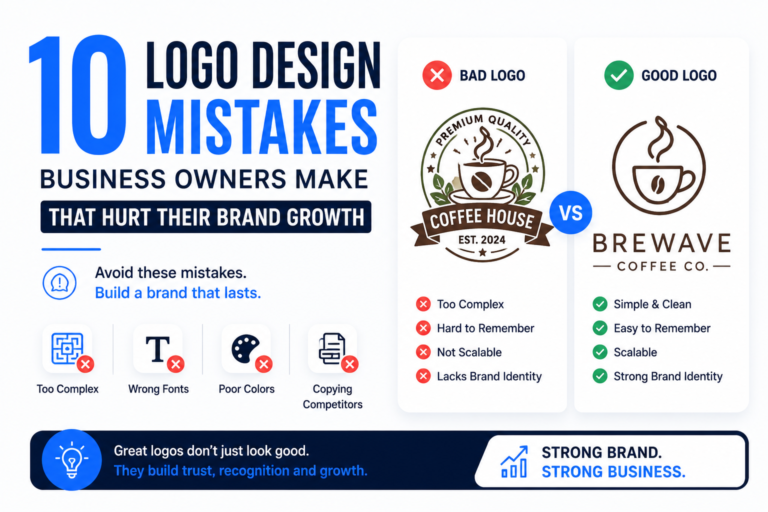
Introduction One of the most common — and costly — misunderstandings I see among founders and business owners is this: “We need branding. Let’s start with a logo.” On the surface, that sounds reasonable. In reality, it’s backwards. A logo is not a brand.A logo is not a strategy.And a logo alone will not make your business memorable, trustworthy, or scalable. I’ve worked with startups at idea stage, growing businesses rebranding after traction, and established companies struggling with inconsistent messaging. Across all of them, the same issue appears: confusing branding with logo design. This article breaks down the real difference between branding and logo design — not from a textbook perspective, but from real-world execution, strategy, and growth outcomes. If you’re building a serious business, understanding this distinction will save you time, money, and positioning mistakes. Step 1: Critical Questions That Need to Be Answered To fully understand branding vs logo design, these are the questions founders must get clarity on: Let’s break these down properly. What Branding Really Is (Beyond Visuals) Branding is the perception of your business in the mind of your audience. It’s not what you say your brand is — it’s what people feel, expect, and remember when they interact with your company. From a strategic standpoint, branding includes: In practice, branding answers questions like: A strong brand creates clarity, trust, and differentiation — long before a logo is noticed. What Logo Design Actually Is A logo is a visual identifier. That’s it. It’s important, but its role is specific: A logo does not: Think of a logo as a symbol, not a system. Without context, strategy, and meaning behind it, a logo is just a shape. Why Branding and Logo Design Get Confused The confusion exists for three main reasons: 1. Branding Is Invisible When Done Well Good branding feels “obvious,” so people underestimate it. 2. Logos Are Tangible Founders can see a logo. Strategy feels abstract. 3. Many Designers Sell Logos as Branding This creates the illusion that visuals alone equal brand value. The result? Businesses invest in logos without investing in the thinking that gives those logos meaning. Branding vs Logo Design: The Strategic Difference Here’s how I explain it to founders: Branding defines: Logo design visually reflects those answers. Without branding, logo design becomes guesswork. How Branding Directly Impacts Business Growth From experience, strong branding affects growth in very real ways: Businesses with weak branding rely on: Branding reduces friction. Logos alone do not. What Happens When Businesses Focus Only on Logo Design This is one of the most common mistakes I see. Typical outcomes: The logo may look “nice,” but the business still struggles to explain: That’s not a design problem — it’s a branding problem. Common Branding Mistakes Founders Make Mistake #1: Starting With Visuals Instead of Strategy Design should follow decisions, not replace them. Mistake #2: Copying Competitors If you look like everyone else, you compete on price. Mistake #3: Ignoring Brand Voice How you speak matters as much as how you look. Mistake #4: Treating Branding as a One-Time Task Brands evolve as businesses grow. Mistake #5: Separating Branding From Growth Branding is not decoration — it’s a growth lever. Real-World Case Study Insights Case 1: Startup With a “Great Logo” but No Traction A startup had a polished logo but unclear messaging.After a branding reset: The logo stayed. The strategy changed everything. Case 2: Service Business Rebrand A service company focused on branding instead of just redesigning visuals.Results: Branding aligned perception with value. Case 3: Founder-Led Personal Brand The logo was irrelevant at first.Branding focused on: Result: Trust and inbound leads without heavy visuals. When Do You Actually Need a Logo? You need a logo when: If those aren’t defined, a logo won’t fix the problem. A Practical Branding-First Approach Here’s the approach I recommend: This ensures your logo actually represents something meaningful. Branding as a Long-Term Asset Strong brands: Weak brands constantly redesign instead of refining. The difference isn’t budget — it’s strategy. Conclusion: A Logo Is a Tool, Branding Is the System If there’s one takeaway, it’s this: A logo helps people recognize you.Branding helps people choose you. Businesses that understand this build trust faster, grow sustainably, and avoid expensive rebrands down the line. Call to Action: Build a Brand That Actually Grows Your Business If your brand currently feels unclear, inconsistent, or disconnected from growth — a new logo won’t solve it. I help startups and businesses: If you want branding that does more than look good — let’s build it properly. 👉 Work with a brand partner, not just a logo designer.